Sloth Parenthood:
How Often Do Costa Rica’s Favorite Residents Have Babies?
If you’ve ever spotted a sloth hanging out in the lush canopy here at Sukia Park or around the Manuel Antonio area, you already know they do absolutely everything in slow motion. But did you know their family planning moves at a turtle’s pace too?
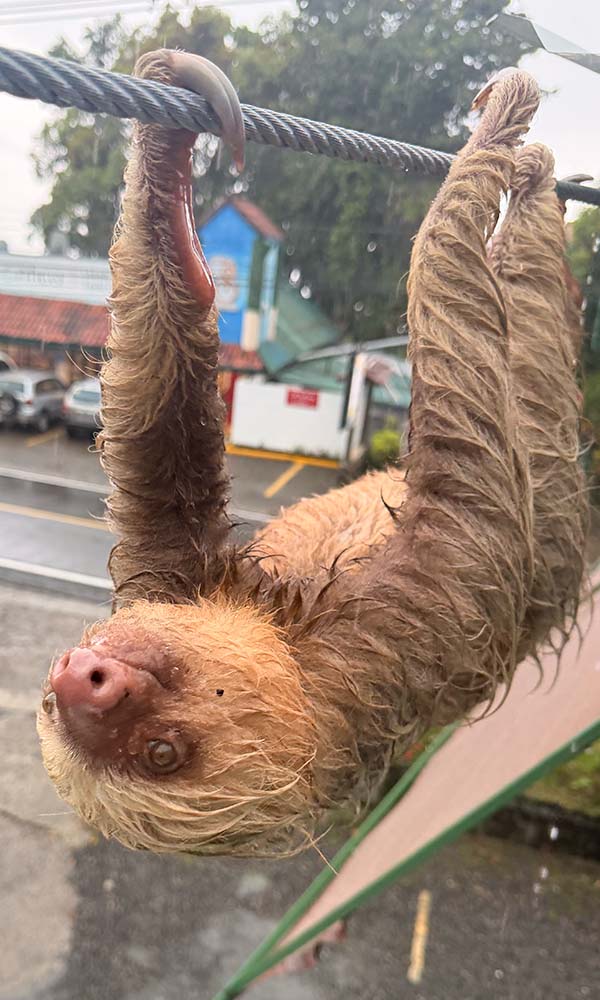
Costa Rica is home to two distinct species: the Three-Toed Sloth (Bradypus variegatus) and the Two-Toed Sloth (Choloepus hoffmanni). While they might look similar from a distance, their journeys into parenthood are completely different—and one of them takes a surprisingly long time!
Here is a quick look at
often these iconic rainforest creatures welcome new life into the jungle.
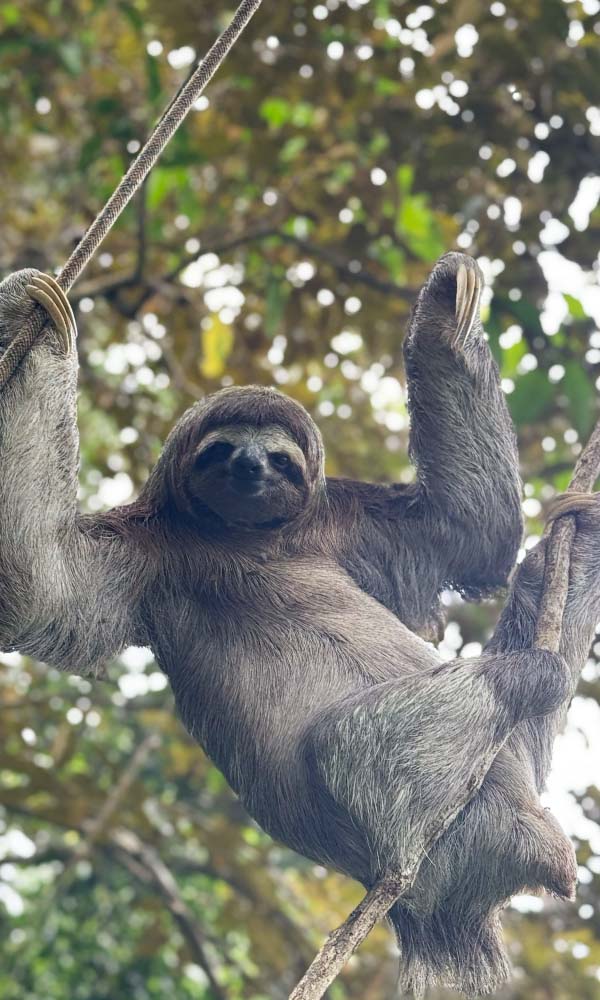
The Three-Toed Sloth: A Seasonal Routine
The three-toed sloth is the one you’ll most frequently see during the day, easily recognizable by its dark “mask” around the eyes and its seemingly permanent smile.
- How Often? Females give birth to a single pup roughly every 12 to 15 months.
- Pregnancy: Their gestation period lasts about 6 months.
- Raising the Baby: The mother carries the newborn closely on her chest for another 5 to 6 months. During this time, she teaches the baby exactly which leaves are safe to eat. Once the baby is ready to explore on its own, the mother leaves that specific territory to her offspring and moves to a neighboring area to start the cycle again.
Local Insight: Here on the Pacific side of Costa Rica, including Manuel Antonio, these births often align beautifully with the transition into the rainy season, ensuring there is an abundance of fresh, tender young leaves for the growing baby to digest.
The Two-Toed Sloth: Ultimate Patience
Our nocturnal, slightly larger neighbors—the two-toed sloths—take the concept of “slow living” to an entirely different level when it comes to pregnancy.
- How Often? Females have a single baby every 15 to 18 months at the very earliest.
- Pregnancy: Unbelievably, a two-toed sloth pregnancy lasts between 11.5 and 12 months—nearly a full year! That is longer than a human pregnancy, just for a single small pup.
- Raising the Baby: The baby stays tightly clung to the mother’s belly for 6 to 9 months. Even though they start tasting solid leaves within their first few weeks, they rely heavily on Mom for protection and transport.
Unlike their three-toed cousins, young two-toed sloths are known to linger in their mother’s home range for up to two years before completely venturing off to establish their own territory.
Sloth Conservation: Every Baby Counts
Because both species only give birth to one pup at a time and require more than a year between cycles, sloth populations recover very slowly from environmental challenges. This slow reproductive rate is exactly why protecting the biological corridors, stopping deforestation, and respecting wildlife habitats in Manuel Antonio is so vital.
Next time you are exploring the trails at Sukia Park, keep your eyes on the treetops. If you are lucky, you might just catch a glimpse of a dedicated sloth mother carrying the next generation of the Costa Rican canopy!